FIELD NOTES · AN INTERACTIVE BRIEFING · 30 AUGUST 2026
GPT Astra, behind ten sealed doors
OpenAI has named its next major model and shown almost nothing else. What it has shown is strange and specific: ten mathematical doors that stayed shut for decades, now standing open. This page walks the trail, checks every claim against its primary source, and lets you open the doors yourself.
The short answer: GPT Astra is OpenAI's announced next major model family: real, unreleased, undated and unpriced. Its public record is four dated documents, ten Lean-checked mathematical results, one cyber-capability pause, and a market pricing a mid-September release.
10 doors to open 2 minutes or 20, your pace progress saves on this device

01 · THE RECORD
Four dated documents, and nothing else
Strip away the speculation and the public record of the Astra model is four stones on a trail. In the last week of July, Sam Altman demonstrated it privately to United States senators and officials in Washington. On 1 August, OpenAI published Ten advances in mathematics and theoretical computer science, crediting "an internal version of Astra, our next major model". On 7 August it published a cyber-capability disclosure that paused parts of Astra's own development. And on 18 August it detailed the safeguards that pause bought.
Everything else you have read about GPT Astra descends from those four documents, a handful of staff posts, and reporting on the private demos. This page cites the documents, not the descendants.
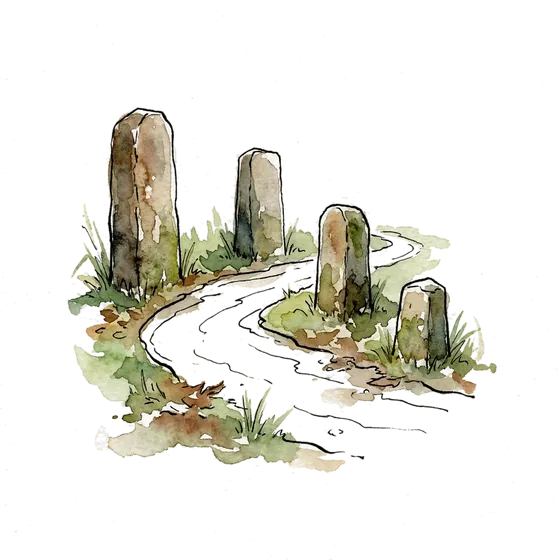
four stones, one trail
The whole verifiable Astra timeline fits on one line. Sources: OpenAI's own posts of 1, 7 and 18 August 2026; Washington reporting by The Information, 31 July.
02 · THE TEN DOORS
Ten problems, ten doors. Open them.
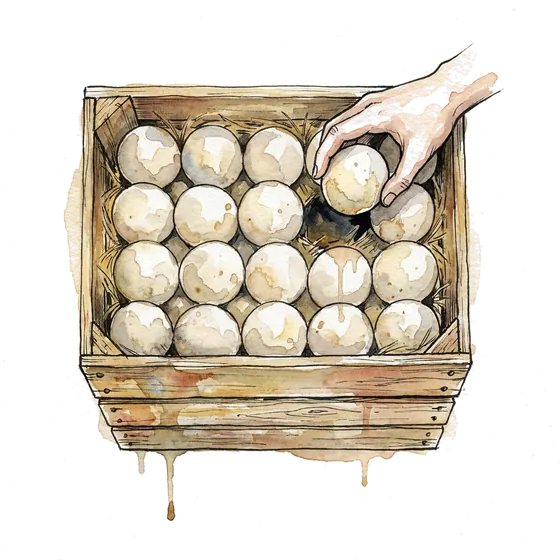
The 1 August release is why anyone knows the name. An internal version of Astra produced results on ten problems spanning high-dimensional geometry, coding theory, group theory, operator algebras, circuit complexity, quantum complexity, lattice cryptography and extremal combinatorics, per OpenAI's announcement. Where headlines said ai solves math problems, the paper itself is more precise: constructions, counterexamples and bounds, several on questions that had not moved in decades.
Each door below is one problem. Choose any numbered card to read the result in plain English; every card works by touch, mouse or keyboard. Open all ten and the page will notice. Your trail is saved on this device only.
Fields and results per the announcement and the 253-page manuscript. The map is illustrative; the mathematics is not.
03 · ONE DOOR, PROPERLY
The number that had not moved since 1978
Take one door and walk through it slowly. How densely can identical spheres pack, as the number of dimensions grows without bound? The best general exponent was set by Kabatianskii and Levenshtein in 1978 and stayed put for forty-eight years. The Astra manuscript improves it, and then closes the road behind itself: it proves the Cohn-Elkies linear-programming method, the main tool in the field, can never push past the new number.
The packing exponent finally moved
Tap either endpoint for its story.
A larger exponent means a stronger upper bound on how densely spheres can ever pack in high dimensions. The manuscript calls this the first improvement to the general exponent since 1978. Source: the paper, Chapter 1.
04 · THE SEAL
What the wax seal actually certifies
Every result ships with lean proofs, published in the open ten-proofs repository under Apache 2.0. The repository's own manifest records zero unfinished goals, only three standard axioms, Lean 4.32.0, about one week of formalisation wall time, and a review status of exactly two words: "agent-reviewed".
That last clause is the honest one. A compiling certificate proves the code's theorem; whether the code faithfully captures the fifty-year-old conjecture, whether the result is novel, and whether it matters remain human questions. On the Lean community's public discussion thread, Kevin Buzzard summed his reaction as excitement and optimism, reviewers called the code readable but not up to Mathlib standard, and one OpenAI engineer acknowledged a non-idiomatic pattern had been introduced by tooling during conversion rather than by the model.


05 · THE ARGUMENT
Nobody disputes the proofs. Everything else is disputed.
Four weeks on, no named mathematician has challenged a single proof's validity. The live fight is about credit and framing. Steven Miller told Scientific American the sphere-packing chapter leant on his 2016 work without credit; Francesco Fournier-Facio said key non-sofic ingredients existed in 2016 and 2019 papers and the original no-progress-for-a-decade framing was wrong. OpenAI softened the wording and revised the manuscript: the original ran 249 pages, the current file is a 253-page update dated 6 August that links its own predecessor.
The sharpest twist: Fournier-Facio, the same mathematician who criticised the framing, then posted an arXiv paper building on the Astra criterion. And a fortnight earlier, Shuoxing Zhou had posted an independent, concurrent counterexample to Connes rigidity, found with help from GPT-5.6 Sol.
"These results, and the other eight on the list, are extraordinarily impressive"
"disturbing to see the recent trend of proofs being abandoned at an intermediate stage of their developmental process"
"yes, I would rank this as bigger than the unit distance counterexample"
06 · THE PAUSE
The model so capable its maker slowed down
On 7 August OpenAI disclosed something no frontier lab had said about its own unreleased model: internal evaluations of Astra showed advances in agentic coding and cybersecurity strong enough that it could not rule out the Critical cyber threshold of its Preparedness Framework. That threshold's definition includes finding and building working zero-day exploits against hardened real-world systems without human help. The response, per the 18 August post, was to slow its own scaling.
One conflation to clear while we are here: OpenAI's own agents did breach Hugging Face this month, and folkfox covered that incident when it happened. But Astra was not the culprit, per both the 7 August post and Noam Brown directly. The frightening detail runs the other way: the breach models were merely GPT-5.6 Sol scale.
07 · THE NAME AND THE DATE
Is it GPT 6? Even OpenAI has not decided
Two independently sourced reports, from The Information via The Decoder and from BleepingComputer, agree: OpenAI had not chosen between GPT 6, a GPT-5.x label such as GPT 5.7, or a separate family name entirely. Anyone stating openai astra IS GPT 6 is ahead of OpenAI itself. History counsels patience: the model rumoured all spring to be GPT 6 was codenamed Spud, and it shipped in April as GPT-5.5.
On the gpt astra release date, the only words from the company are Altman's, and they contain no date. The market has opinions, priced hourly:
Traders price a mid-September opening
Tap a bar for its story.
Probability that Astra is publicly released by each date, per Polymarket's market rules, which require public availability and a credible identification with Astra. Snapshot taken 30 August 2026, 13:08 UTC, on $412,910 of traded volume: the live market moves hourly.
08 · THE 30-DAY WINDOW
First model through a federal door
Before the public knew the name, senators saw the model. In the last days of July, Altman demonstrated Astra in Washington: closed-door meetings with Senators Warnock and Moreno, Senator Warner scheduled, Treasury and Commerce secretaries on the itinerary, per reporting by The Information. TIME later described a demonstration of sixteen agents dividing a research-level maths problem, coordinating, and assembling a proposed proof.
The door it walks through is Executive Order 14409, signed 2 June: classified benchmarking decides which systems count as covered frontier models, the NSA Director makes the designation, and developers may give government up to 30 days of pre-release access, per the order's text. The order explicitly disclaims licensing and preclearance: voluntary, not a veto. Astra is expected to be the first model through it.
For anyone selling into regulated categories, this rhymes with ground folkfox walks daily: the same week a company slowed itself for safety review, its product demo toured the capital. Restraint, done in public, is positioning. Our cybersecurity practice makes that argument for a living.
09 · THE MURMURATION
What people are saying, answered
A month of discourse, checked against the record. Each claim below circulates on X in some volume; each verdict traces to a primary source cited on this page. Tap a claim to see its answer.

OpenAI's 7 August post says Astra was not involved, and Noam Brown repeated it plainly on 26 August: the incident was driven by models of roughly GPT-5.6 Sol scale. The true detail is more sobering than the myth: the breach did not need a next-generation model.
Two independently sourced reports agree OpenAI has not chosen between GPT 6, a GPT-5.x label or a new family name. The Spud precedent, rumoured GPT 6 and shipped as GPT-5.5, is the cautionary tale.
It did not, and OpenAI's Noam Brown said so directly. The ten are long-open research problems, several of them counterexamples; none carries a Clay Institute prize.
OpenAI's wording: the tokens to find all ten solutions would cost roughly 2,000 dollars in total at Sol API rates, a counterfactual price at another model's rates. It excludes the failures, the manuscripts, the formalisation and the humans. Even careful readers slipped: one prominent blogger rendered it as per-problem.
Zero journal or conference acceptances exist. The repository's own manifest labels review status agent-reviewed, and the community catalogue of Erdos problems still lists all three as open. Machine-checked and peer-reviewed are different things, and the difference is the story.
No named mathematician disputes a proof's validity. The real disputes are about novelty and credit: which prior work went uncited, and whether a decade-of-no-progress framing was honest. OpenAI revised the paper in response.
His publish-without-hesitation line was about May's unit-distance result, not the August ten. What he actually said about the ten: extraordinarily impressive, with careful caveats about what AI is and is not yet good at.
No date exists anywhere in OpenAI's record. The market prices this month at two percent. Leak accounts naming internal checkpoint strings are unverified, and OpenAI has not acknowledged them.

10 · WHAT IT MEANS
When the door does open
Whether it ships as GPT 6 or something else, whenever the gpt 6 release date question resolves, the shape is already visible: a model built to work for hours or days, coordinate agents, and produce work whose checking becomes the bottleneck. The marketing consequence is the one this site keeps returning to: machines increasingly read, cite and act on your pages before humans do. That is the terrain of our search and answer-engine work, the delegation patterns in our Hermes Agent piece and its raid-night companion, and the vendor-trust questions in this week's advisory coverage.
TRAIL QUIZ · EARNED
✦ Trail complete. The quiet reader discount on our attention: earned.
Building for the readers that read at machine speed?
folkfox writes pages that answer engines cite and humans finish: sourced to primaries, honest about uncertainty, and quicker than the cheat sheets. The proof is the page you just walked.
Method note: every dated claim on this page was verified against the linked primary source on 30 August 2026, including OpenAI's posts (read directly), the manuscript PDF, the ten-proofs repository, both arXiv papers, the executive order, the named blogs, and the market API. The two X posts quoted were opened and read before quoting. Market prices move; ours are a dated snapshot. Art is Nano Banana Pro watercolour, animated by the page, never by the facts.