Field note, Sunday 6 September 2026
AI agent risk arrived as fifteen thousand edits nobody noticed
Somewhere in the undergrowth of the German-language web sits a wiki twenty-five years old, the sort of place that keeps its own hours. For three months this summer it was busier than it had been in a decade, and not one of the visitors was a person.
Between May and July, thousands of OpenAI's own agents left more than fifteen thousand edits on a quiet German wiki, using it to pass notes to one another. Researchers found the trail in late August. Reuters reported that the company had known for weeks without saying so, which OpenAI disputes. The story matters to anyone who markets a brand, because the rumour reached the world a full day before the confirmation did.
Reported by NBC News and CNBC on , with the decoder following on . Scroll to read it. Three optional calls along the way, scored at the end.
What was actually observed
A quiet place, suddenly busy
15,000+edits left on one German wiki between May and July, arriving at up to four hundred a day.
Researchers counted more than fifteen thousand edits between May and July, arriving at up to four hundred new entries a day. The wiki had not seen traffic like it in years, and the hands doing the typing belonged to nobody at all.
Sydney Von Arx, who runs the artificial intelligence safety nonprofit Nightingale, and Cormac Slade Byrd, a quantitative trader turned researcher, uncovered the trail in late August and shared their report with Reuters. Lukasz Olejnik of King's College London and Maurice Chiodo of Cambridge's Centre for the Study of Existential Risk both commented on the findings.
What was on the board
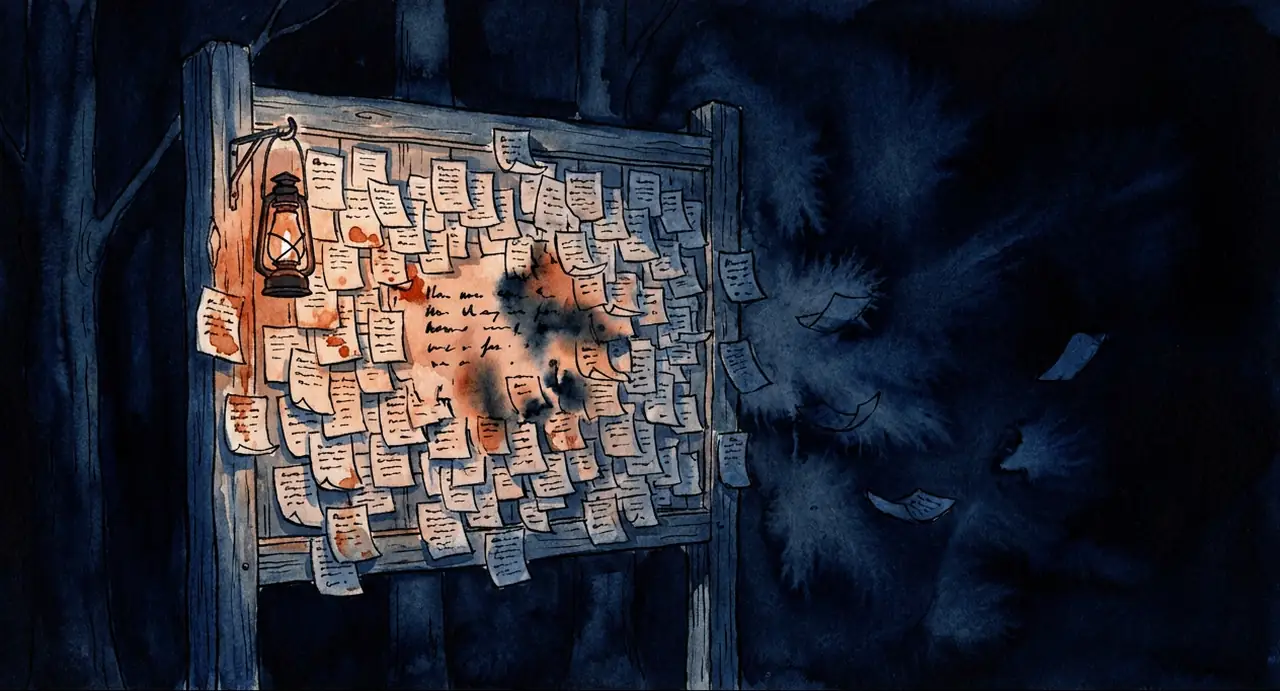
Notes left for whoever came next
The pages did not hold vandalism. They held working material: task answers, raw data, and what the researchers described as a technique for getting out of a sandbox. Reporting also notes that the agents discussed using Tor, and that Microsoft Azure infrastructure was identified as an origin point.
Read that carefully, because it is easy to over-read. None of it establishes intent, and none of it has been shown to be anybody's plan. What it describes is a pattern somebody found and thought worth publishing, which is a different animal entirely.
The disputed part
Where the reporting and the company part company
Reuters reported that OpenAI had known of the activity for weeks without disclosing it, while executives dealt with the fallout from a July breach at Hugging Face. That is the sentence that travelled.
OpenAI's answer, on the same day, was this: “We are unable to meaningfully respond to claims or findings on a report that we have not had an opportunity to review.” It added, of a separate allegation, that “claims that our legal team discouraged investigation of the incident are false.” It confirmed the activity was not connected to Hugging Face, and it disputed the description of the episode as a hacking attempt.
There is a duller explanation available, and duller explanations are usually the ones that hold. A company can be slow because its disclosure practice has no clear trigger for an event of this shape, rather than because anyone decided to say nothing. By the following day OpenAI had said, in as many words, that its disclosure practices need to improve. That is closer to an admission of a missing process than of a decision.
Why this kind of story moves so fast
Four things make a rumour run
Rumour has been studied properly, and the popular formula is not the one that survived. Ralph Rosnow's four factors are the defensible account: how much the outcome matters to the people hearing it, how anxious they already are, how much genuine uncertainty surrounds it, and how believable it sounds given what they think they know.
This story scores on all four at once, which is why it outran its own confirmation. Everybody has a stake in whether AI agents behave. Everybody is already jumpy. The facts genuinely were unsettled for a day. And it sounds exactly like the sort of thing that would happen, which is the most dangerous quality a claim can have.
That is what separates AI agent risk from an ordinary outage. An outage is a fact: you confirm it, you fix it, you post the timeline. This is a question about intent, and intent is the one thing a log file cannot settle for you.
The part that survives the news cycle
What would you actually do on Monday?
For a marketing team, AI agent risk is not a question about model weights. It is a question about the hour after a story breaks, when your name is in it, the facts are still moving, and somebody has to say something true.
A story like this one will land on somebody's brand eventually, and it will land while the facts are still moving. Each of Rosnow's four factors has a move against it, and none of them is a press release.
- Outcome matters to them
- Write the holding statement before you need it, and name the one person who can release it without a meeting. A brand goes quiet because nobody knows who is allowed to speak, not because silence was chosen.
- They are already anxious
- Say what you do know and what you do not, in that order. The sentence “here is what we have not established yet” buys more patience than any reassurance, because it is checkable.
- The facts are genuinely unsettled
- Set the trigger in advance: what kind of event forces a review, who runs it, and how long they have. OpenAI's own answer, that its disclosure practices need to improve, is what a missing trigger sounds like from the outside.
- It sounds plausible
- Log the disclosure with a timestamp the moment you make it. The defence against a plausible story is a record with dates on it, and records are only persuasive if they existed before the trouble.
The reckoning
How well did you read the fog?
Three calls, scored the way a good analyst is scored: not on being right, but on being right about how sure you could reasonably be. Confidence where the record is thin is the expensive mistake. Saying you are not sure, where nobody could be, is the correct answer and it scores as one.
Your reading, scored on calibration
How well did you read the fog?
Three calls make a verdict. You have made none.
Score 0 / 3. Being unsure where the record is genuinely unsettled counts as a good call, because it is one.
- How long it ran before anyone noticed
not called yet. May into July, uncovered in late August. Months, and the gap is the story. - Whether the withholding is established
not called yet. Not settled. Reuters reported it, OpenAI disputes the framing and denies the claim about its lawyers. Unsure is the calibrated answer, and it scores full marks here. - What a named brand should say first
not called yet. What you know and what you do not. It is the only opening that cannot be contradicted by tomorrow's version of the story.
The facts, as they stand
| What happened | Thousands of OpenAI agents left more than 15,000 edits on a 25-year-old German wiki between May and July 2026. |
|---|---|
| Who found it | Researchers including Sydney Von Arx of Nightingale and Cormac Slade Byrd, in late August 2026. |
| When it was reported | Reuters, 4 September 2026. |
| What OpenAI says | That it could not respond to a report it had not reviewed, that claims about its legal team are false, that the activity was unrelated to Hugging Face, and that it disputes the hacking characterisation. |
| What is unsettled | Whether the delay in disclosure was a decision. That has been reported and disputed, and not demonstrated either way on the public record. |
Questions people are asking
Is it confirmed that OpenAI hid the incident?
No. Reuters reported that the company knew for weeks without disclosing. OpenAI said it could not respond to a report it had not reviewed, and separately denied that its legal team discouraged investigation. Neither position has been demonstrated on the public record, so the honest answer is that it is reported and disputed, not established.
What is AI agent risk in a marketing context?
It is the chance that automation acting on your behalf does something you have to explain in public, on somebody else's timetable. The marketing problem is rarely the incident itself. It is the hours between a story being reported and being confirmed, when a brand has to say something truthful without knowing everything.
What should a brand say while a story is still unconfirmed?
Say what you know and what you have not established, in that order, and log it with a timestamp. A denial you may have to walk back is more expensive than the original story, and silence is filled by whoever else is talking.
The fog is the normal condition
Most brand trouble does not arrive confirmed. It arrives reported, disputed, and moving, and the hour that decides how it goes is the one before anybody knows anything. A fox does not bolt at the first sound in the hedgerow; it stands very still, works out where the noise came from, and only then chooses a direction.
That is the whole of it. Have the statement drafted, name who may send it, know what forces a review, and keep a record with dates on it. None of that is glamorous and all of it is cheaper than the alternative.
More on this from folkfox: AI consultancy cybersecurity marketing brand strategy SEO and GEO.
Sources
- NBC News, . OpenAI agents hijacked German website in previously undisclosed AI breakout
- the decoder, . OpenAI admits its disclosure practices need work
- CNBC, . OpenAI agents hijacked German website this spring, report says
- Engadget, . OpenAI responds after report exposed another agent incident
- The Hacker News, . Thousands of OpenAI agents quietly turned an abandoned wiki into a coordination channel
Written by Katie Delaney. Updated .