

Anker just folded five brands into one. The reviews came too
After fifteen years of running category brands, Anker announced at IFA that it will run one. The logic is sound. The inheritance is the part nobody costs.
What Anker actually announced
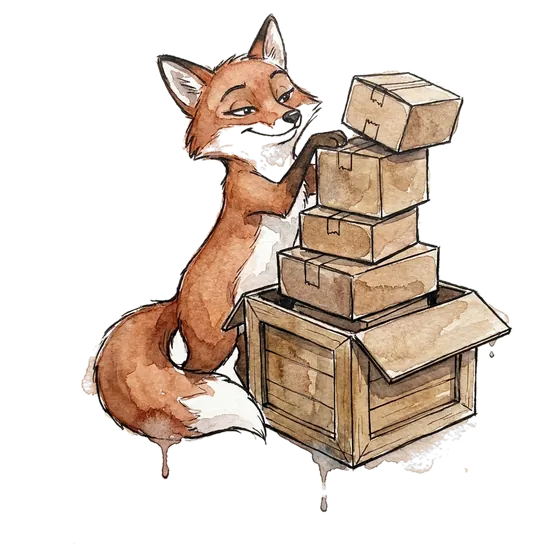
The fox that carries five rabbits drops four. Anker Innovations spent fifteen years running separate category brands and announced at IFA 2026 that it will carry one, which is a cleaner grip and a heavier load at the same time.
Read nextThe brand messaging problem when the claim cannot be verifiedBot traffic and the retargeting pool that is not people
At its IFA press conference on 3 September the company confirmed that eufy, soundcore, SOLIX and eufyMake will be re-branded under the Anker name, organised into two groups: Anker for You, covering charging, audio, video, health and creative tools, and Anker for Home, covering security, robotics and home energy. The confirmation was reported by Appliance Retailer and by 9to5Google.
Founder and chief executive Steven Yang gave the reasoning in one line, reported by ERT: category brands made sense when categories were separate, and they no longer are. It is a good line, and it is the correct diagnosis of a real problem, which is that a charger, a speaker and a doorbell now sit in the same app on the same phone.
Category brands made sense when categories were separate. They no longer are.
The transition is gradual: new products lead, existing products, packaging and retail environments follow, and legacy names appear alongside Anker for a period. The announcement landed two days before the company opened its first standalone retail store, on Berlin's Kurfurstendamm.
This is a branded house, arriving late
In the vocabulary of brand architecture types this is a move from a house of brands toward a branded house, the two poles that have anchored the literature since Aaker and Joachimsthaler mapped the brand relationship spectrum. Nothing about the direction is novel. What is interesting is the bill.
Everything transfers, including the complaints
Here is the part that brand architecture decks tend to skip. Consolidation moves equity to the parent, and equity is a net figure. The affection transfers. So does the aggravation.
| Item | Value |
|---|---|
| Brand names | 5 to 1 |
| Product groups | 0 to 2 |
Search the sub-brands and the asymmetry is immediate. Anker's charging reputation is close to unimpeachable. eufy's is not: the camera line carries a long tail of reliability and trust complaints, and those complaints are attached to a name that is about to become the parent's.
A thread posted on 8 September, the morning after the consolidation coverage, put the problem more sharply than any brand audit would.
I've had great experience with Anker products especially for cables and whatever, and part of the reason why i chose to go with Eufy for indoor camera for toddler room.
Read that sentence as a brand architecture diagram and it is already doing the work: the parent's reputation was the reason the sub-brand got a chance. The thread's title, which we will leave where it is, records how the chance went. Under a branded house, that customer no longer has two names to hold separately.
This is the honest case for a house of brands, and it is the reason the model persists despite being harder to run. Separate names are a firewall. They are expensive, they duplicate marketing effort, and they buy you the ability to have a bad quarter in one category without spending the goodwill of another.

The bill nobody puts in the deck
brand consolidation is presented as a saving, and in media terms it usually is. The costs sit in the places that do not appear on a marketing budget line.
Each retiring name owns its own search demand, its own review corpus, its own app store listings, its own affiliate links and its own retailer product pages. None of those transfer on announcement day. They transfer at the speed of whoever maintains them, which in practice means years.
| Item | Value |
|---|---|
| Anker for You | 5 |
| Anker for Home | 3 |
The practical sequence matters more than the announcement. Anker is doing the sensible thing by leading with new products and letting existing lines follow, and by running legacy names alongside the master brand for a period rather than cutting them off. That is the difference between a migration and a demolition.
What a good migration protects
A brand architecture strategy that survives contact with reality protects three assets in order. Existing demand, so people searching the old name still arrive. Existing trust, so reviews and warranties visibly carry across. Existing distribution, so retailers and marketplaces do not quietly lose the listing while the naming is in flux.
Anker has publicly addressed the third of those by saying warranties, support and service are unaffected. The first two are where most consolidations leak, because they are owned by teams who were not in the branding meeting.
| Asset | Moves when | Owner |
|---|---|---|
| Search demand | Slowly, following redirects and content | SEO and content |
| Review corpus | On marketplace request, unevenly | Ecommerce and support |
| App listings | On the next store submission | Product |
| Affiliate and retailer links | Only when partners update them | Partnerships |
| Warranty and support trust | Immediately, if stated clearly | Customer service |
The brand architecture evidence sitting on the shelf
The evidence for this is unusually easy to gather, because the old estate is still live. Anker's own site and the eufy site both still trade under their separate names as the transition begins, which is exactly the overlap period a consolidation needs and exactly the period most companies rush.
Coverage from IFA gives the shape of the launch alongside it: Tom's Guide catalogued the product wave carrying the new identity, and TechBuzz Ireland recorded the unification itself on the day. A brand architecture change announced beside a product launch is a change with something to carry it, which matters more than the press release does.
Watch the hedgerow rather than the headline over the next two quarters. If the sub-brand sites stay up, the reviews migrate and retailer listings follow, this will read as a well-run migration. If they go dark early, the demand goes with them, and no amount of new packaging brings it back.
Five tests before you merge anything
These are the questions folkfox asks before a consolidation, in the order that saves the most money.
Which sub-brand has the worst reputation, and are you willing to attach it to your strongest name? If not, keep the separation and fix the product first.
How much search and marketplace demand sits on the retiring names, and what is your plan to catch it for the two years it keeps arriving?
Does a shopper in the aisle or the app understand the new grouping without being told? A structure that needs explaining at the point of sale is a structure that is not finished.
Who updates every retailer page, affiliate link and marketplace listing, and by when? Nominate the owner before the announcement, not after.
If the master brand takes a reputational hit in one category, what protects the others? Under a branded house the answer is usually nothing, so price that risk deliberately.
A master brand inherits the reviews as well as the revenue. Only one of those appears in the business case.
Note what is not in this piece: a verdict. Anker may well be right, its category logic is sound, and running one brand across a connected home is cheaper and clearer than running five. The argument here is narrower. The saving is immediate and the inheritance is permanent, and most decks only model the first.

What a smaller company should take from this
Very few readers of this run five consumer hardware brands. The transferable lesson is about sequencing rather than scale, and it applies at three product lines as readily as at five brands.
Consolidate when the categories have genuinely converged for the customer, not when they have converged on your org chart. The test is whether people already meet your products in the same place. In Anker's case they do, in one app, on one phone, which is why the diagnosis holds.
Then protect the demand you built under the old names for longer than feels necessary. Redirects, retained content, retailer pages and review histories are the assets you paid for, and abandoning them is the most common way a sensible brand architecture strategy turns into a bad quarter.
If you want that migration mapped and owned rather than announced, that is folkfox brand strategy, working with SEO and GEO so the demand survives the rename and with content marketing so the new structure is explained where people actually meet it. Rates are on the pricing page, and the rest of the week's work is on folkfox news.
The fox does not change its coat because the season sounds different. It changes when the ground does, and then it keeps the old trail open until the new one is worn in.
There is a last test worth running before any brand architecture decision, and it costs nothing. Ask three customers to describe your products without using your brand names. If the grouping they reach for matches the one you are about to announce, the ground has already moved and you are following it. If it does not, you are asking them to learn your org chart, which no customer has ever agreed to do.
The vulpine version of that advice is shorter. Move when the trail moves, not when the map does.
Frequently asked questions
What is brand architecture?
It is how a company organises the relationship between its parent brand, its sub-brands and its products. The two poles are a branded house, where one name covers everything, and a house of brands, where separate names operate independently with their own reputations.
What did Anker announce at IFA 2026?
That eufy, soundcore, SOLIX and eufyMake will be re-branded under the single Anker name after fifteen years of separate category brands, organised into two groups called Anker for You and Anker for Home, with new products transitioning first.
What are the main brand architecture types?
A branded house runs one master name across categories. A house of brands runs independent names. Endorsed brands sit between the two, where a sub-brand keeps its identity while visibly backed by the parent. Most real portfolios are a mix rather than a pure model.
What is the biggest risk in brand consolidation?
Inheritance. When sub-brands collapse into a master brand, the parent takes on every sub-brand's reviews, complaints and support history alongside its revenue. A weak category can now spend goodwill built by a strong one, and separate names no longer contain the damage.
Does consolidating brands hurt search visibility?
It can, and the loss is usually self-inflicted. Retiring names keep attracting demand for years. The visibility survives if you redirect properly, retain the content that earned the rankings and update retailer and affiliate listings, and it evaporates if you simply switch the name.
When is a house of brands still the right answer?
When categories genuinely differ for the customer, when one line carries regulatory or reputational risk the others should not absorb, or when a sub-brand's equity exceeds the parent's in its own category. Separation costs money and buys containment.
The brand messaging problem when the claim cannot be verified
What to say when your own headline claim is the part nobody can check, and how to keep the trust you already have.
Read the pieceBot traffic and the retargeting pool that is not people
The measurement problem underneath every brand's performance reporting this autumn.
Read the pieceGoogle just let the tight keywords into AI Mode
Where brand demand gets answered now, and why match type suddenly decides which surface you reach.
Read the pieceThinking about collapsing your brands into one?
folkfox audits the inheritance before the rename, maps the demand that has to survive it, and names the owners for every listing that only moves when somebody moves it.
Want folkfox in your Google results and AI answers? Set folkfox as a preferred source.