
The Release Date Retired Itself. Music Marketing For Artists Just Caught Up.
un:hurd Music retired the "release cycle" for a "planning cycle" on 7 September 2026. The rename is small. The admission behind it, that one release date was never the right unit to plan around, is not.
un:hurd retires the release date, and music marketing for artists catch up#
On 7 September 2026, un:hurd Music, the artist marketing platform backed by EMPIRE and used by more than 200,000 registered artists, quietly retired a word. The word was "release". Its 2.0 update, reported first by Music Ally, 2026, replaces the platform's old "release cycle" with something broader: a "planning cycle" that folds in the shows around a drop, the brand deals beside it, and the fan-facing decisions in between. For a company whose whole pitch has always been music marketing for artists built for artists who cannot afford a label's machine, that is not a cosmetic rename. It is an admission, and a useful one, that the unit an independent artist plans around has changed shape.
folkfox has spent enough afternoons in the hedgerow of client dashboards to recognise the tell. When a platform rebuilds its central metaphor rather than bolting on a feature, the old metaphor had already stopped matching how people actually work. un:hurd's Insights dashboard, per Music Ally, now leads with "clear summaries and specific actions" instead of raw stats, and new AI tools draft press releases, artist bios and sync or brand pitches in an artist's own voice. Read alone, those are three sensible product updates. Read together, alongside the planning-cycle rename, they describe a platform admitting that music marketing for artists built around one release date a quarter were solving last decade's problem.
A tool built around one release date assumed the scent lasted until the next one. Streaming never gave an artist that kind of quiet.
The quick answer above covers the headline. What follows is the maths behind it: why the independent-artist economy forced this rename, what the research says algorithms can and cannot fix on their own, and what good music marketing for artists should now be doing with a planning cycle that un:hurd itself cannot do for a client. It matters for anyone weighing music promotion tools against a label deal, and for anyone already paying for one of the many spotify promotion services that promise a breakthrough single and quietly hope the artist has another one ready when it doesn't land.
The mathematics behind the rename: why music promotion tools had to widen#
Zoom out first, because the industry-wide picture is genuinely healthy. Global recorded-music revenue reached $31.7 billion in 2025, up 6.4 per cent for an eleventh consecutive year of growth, with streaming worth $22 billion of that and 837 million people now paying to subscribe, per IFPI, 2026. None of that growth is shared evenly down to artist level, which is exactly the mismatch the rest of this piece is about.
Now look at the flood underneath the headline. Luminate's year-end count put 253 million tracks sitting on streaming services at the close of 2025, with another 106,000 arriving every single day, up seven per cent on the year before, per Music Business Worldwide, 2026. Independent and DIY distribution accounted for 96.2 per cent of that daily deluge. Almost half of everything hosted, 120.5 million tracks, drew fewer than ten streams across the whole year, and 88 per cent stayed under a thousand. That is the thicket an independent artist releases into now: not a quiet field with room to be discovered, but undergrowth so dense a single release date barely rustles a leaf.
Money is not entirely fleeing the long tail either. Spotify alone paid the industry more than $11 billion in 2025, and the number of artists earning at least $100,000 a year from the platform grew past 13,800, nearly 1,400 more than the year before, with roughly half of all Spotify royalties now going to independent artists and labels, per Spotify, 2026. But that growth sits inside a pool of self-releasing artists expanding far faster than the money is, so an individual act's odds of joining the 13,800 are not improving anywhere near as quickly as the headline figure suggests.
MIDiA Research's own count of the recorded-music market makes the gap explicit. The number of self-releasing artists grew 17.2 per cent in 2024 to reach 8.2 million, while the wider market they were all trying to reach grew only 6.5 per cent, and Artists Direct revenue itself, MIDiA said, grew slower than that market average, per MIDiA Research, 2026. More performers are chasing proportionally less growth every year. That gap, not a marketing team's whim, is why music promotion tools increasingly has to plan for a whole year of moments rather than bet everything on one release week.
Eighty seven per cent of non-major labels told MIDiA it is getting harder to help an artist break through, and seventy eight per cent said retaining a fan's attention, once won, is now the harder problem, per MIDiA Research, 2026. folkfox reads that pair of numbers as the whole argument for planning cycles in one sentence: breakthrough is scarce and retention is scarcer, so any tool that only fires around a release date, whatever it calls itself, is solving the smaller half of what music marketing for artists now need to cover.
The old track was a straight line. The new one is a spiral.#
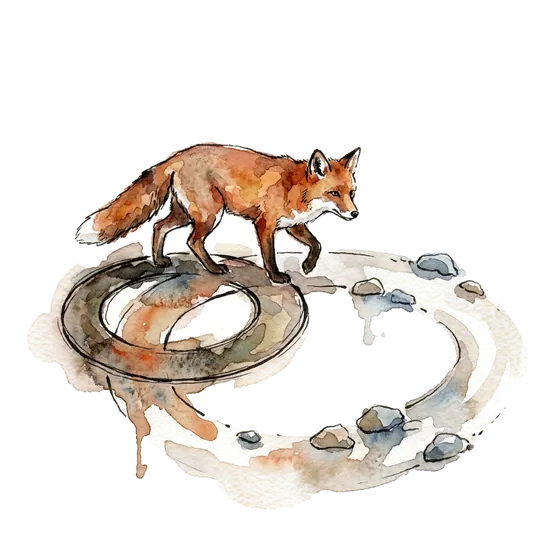
Picture the old release cycle as a fox trail worn straight to one waypoint: tease, drop, promote, done, and the trail goes cold until the next single is scheduled. A planning cycle is not a straight trail at all. It is a spiral, the same ground circled again and again, a show here, a brand deal there, a catalogue moment revisited, each loop a little wider than the last. un:hurd did not invent that shape. It is simply the first mainstream music marketing for artists platform built to admit the shape was already how working artists were operating, whether their tools acknowledged it or not.
The numbers behind that spiral are stark enough to earn a chart of their own. MIDiA Research's most recent count of the recorded-music market found the population of self-releasing artists grew 17.2 per cent in a single year, nearly three times the 6.5 per cent growth in the market itself, and Artists Direct revenue, the segment those same artists earn from, grew slower still, per MIDiA Research, 2026. MIDiA did not publish an exact percentage for that revenue line, only that it trailed the market average, so the true gap is at least this wide, arguably wider. Put the two verified lines on one scale and the gap does the arguing for us.
un:hurd is not a neutral referee here, obviously; EMPIRE's stake and its 200,000-plus registered artists mean a rename that flatters the platform's own roadmap is exactly what you would expect from it. But self-interest and accuracy are not opposites. A company chasing renewal fees has every reason to notice, earlier than most, when the artists paying those fees stop behaving the way the product assumed. un:hurd noticing the gap between 17.2 and 6.5 per cent, even implicitly, and rebuilding its central feature around planning rather than releasing, is the kind of admission a business only makes once the old framing was visibly failing its own customers.
Why algorithms alone will not outfox a thicket this dense#
It would be tidy to conclude that streaming's discovery algorithms will simply solve the saturation problem on their own, sorting the good tracks from the 88 per cent that stall under a thousand streams and handing listeners the right one regardless of how an artist plans. The research does not support that comfort. A CHI 2023 study that interviewed fifteen daily streaming users found algorithmic curation felt reliably impersonal for exactly the moments an independent artist needs most, background listening and active discovery, per ACM, 2023. The algorithm can surface a track. It cannot make a listener feel found by it, and feeling found is closer to what keeps a fan around for the second single than any recommendation score.
A separate study, presented at ACM's RecSys conference and analysing roughly 9,000 streaming users' listening histories over a year, found the effect of algorithmic versus editorial curation on how widely people actually listen depends heavily on who the listener is; there is, in the researchers' own words, no blanket answer, per arXiv / RecSys, 2021. Some listeners' diversity of consumption widened under algorithmic recommendation, some narrowed, and traditional radio programming, for comparison, repeated itself more than personal streaming histories did while still surfacing more music from less-popular artists. None of that is an argument against algorithms. It is an argument against outsourcing an entire music marketing strategy to one, because the tool that decides who gets heard responds differently to every listener it touches.
That is the practical case for planning-cycle music marketing for artists over release-cycle ones, stated plainly: if discovery is unreliable and non-linear, the plan around it has to be built the same way. Below is the same idea in un:hurd's own two names for it.
One waypoint, then silence
Everything built toward a single drop date: tease, release, promote, then the tooling goes quiet until the next single is scheduled. Shows, brand deals and catalogue moments sat outside the plan entirely.
A spiral, not a stop
Releases, live shows, brand and sync deals and fan-facing decisions all sit inside one continuous plan, with un:hurd's rebuilt Insights dashboard recommending the next action instead of just reporting the last one, per Music Ally.
Where this leaves independent acts is close to how folkfox already builds a paid and organic plan for a client. Playlist pitching and paid promotion, the bread and butter of most spotify promotion services, still matter, but they sit inside a longer calendar rather than acting as the whole strategy. A planning cycle does not replace content marketing or brand strategy; it gives them somewhere to live between releases, which is where most independent artists actually spend most of the year.
What good music marketing for artists do with a planning cycle un:hurd can't#
un:hurd's own history explains why this update reads as earned rather than opportunistic. Founder Alex Brees, a former Universal Music Group data analyst, built the platform in 2019 specifically because independent artists lacked the data-driven marketing that major-label acts took for granted, and pitched it on Dragons' Den in 2022 for £120,000 from Peter Jones and Deborah Meaden, per Ember Startups, 2025. EMPIRE's investment in early 2025, when the platform had just over 125,000 registered artists and labels on it, has since helped fund growth past 200,000, per Music Business Worldwide, 2025. That is a company that has been close enough to working artists for six years to notice, before most vendors did, that the release date had stopped being the organising idea.
It is worth saying plainly that reaction to this specific update is still forming. A search of the usual artist and marketing corners of social media the day after launch turned up nothing substantial enough to quote honestly, so folkfox is not going to invent a thread that does not exist yet. That silence is not a verdict. Product renames rarely trend on day one; the artists who notice tend to notice mid-cycle, when the tool either helps them plan the next three months or it doesn't.
The features doing the actual work in 2.0 are the AI tools: drafts of press releases, artist bios and sync or brand pitches, generated in an artist's own voice rather than a generic template, alongside the rebuilt Insights dashboard recommending a next action instead of just reporting last month's numbers, per Music Ally, 2026. Paired with algorithmic pitching across more than 3,000 playlists and paid ad-building for TikTok, Meta, Spotify and YouTube, un:hurd already competes in the same territory as most spotify promotion services, just wrapped now inside a calendar rather than sold as separate one-off tools, per un:hurd, 2026. That is a meaningfully different pitch to an artist choosing music promotion tools on a self-releasing budget: fewer disconnected purchases, one continuous plan.
Cost is the honest next question, and un:hurd's own published rates give a useful floor for it: playlist pitches from £5.99 each, press features around £500 a submission, and paid ad campaigns run on a 20 per cent commission, per Ember Startups, 2025. That is roughly what an independent act should expect to pay for the individual pieces of music marketing for artists before an agency's time is added on top, and it is a useful number to hold in your head before anyone quotes a bigger one.
folkfox is not un:hurd, and we are not pretending a rename fixes an industry-wide saturation problem on its own. What we do agree with is the underlying shift: any credible music marketing for artists offer in 2026 has to plan in spirals, not straight lines, because that is genuinely how the streaming-era attention economy behaves now. Our own music industry marketing work builds exactly this kind of continuous plan around brand strategy, paid social and content for artists and labels who cannot afford to bet a whole quarter on one Friday. If a platform built for hundreds of thousands of self-releasing artists has concluded the release date is not the unit that matters any more, an agency's music marketing for artists should have reached the same conclusion well before now. See our wider industry work, our take on AI in marketing planning, or what a plan like this costs, and get in touch through contact us when you're ready to build one.
Frequently asked questions#
What is the best service to promote music?
There isn't one best service, because the job changes by career stage. Playlist pitching and paid social suit a single release; a planning-cycle platform like un:hurd suits an ongoing calendar of releases, shows and brand deals; and a full agency offering music marketing for artists suits an artist or label who needs the whole calendar built and run for them, not just individual tools bought separately.
How much does it cost to market a song?
Individual pieces are cheap: un:hurd charges from £5.99 for a playlist pitch and around £500 for a press feature, with paid ads run on a 20% commission, per Ember Startups. A single release campaign combining ads, playlist pitching and press typically runs from a few hundred pounds self-managed to several thousand through full-service music marketing for artists with strategy and reporting included.
What does music promotion tools actually involve?
It covers everything a label's marketing department would normally do, run by the artist or a hired team instead of bought piecemeal from generic music marketing for artists: release planning, playlist pitching, paid social and Spotify advertising, press and sync pitching, and fan-data analysis. The independent-specific part is budget discipline: every pound has to be justified against a much smaller pool of revenue than a major label artist works with.
What is un:hurd's planning cycle, and how is it different from a release cycle?
A release cycle organises marketing around one drop date: tease, release, promote, then wait. un:hurd's planning cycle, introduced in its September 2026 2.0 update, folds in live shows, brand and sync deals and fan-facing decisions alongside releases, so the plan runs continuously rather than resetting to zero after each single, per Music Ally.
Are spotify promotion services worth paying for as an independent artist?
Selectively. Legitimate playlist pitching and Spotify ad campaigns can genuinely grow a listener base, but they work best inside a longer plan rather than as a one-off purchase around a single release. Avoid anyone guaranteeing streams outright, since that almost always means bot or fraud traffic that Spotify actively penalises.
Does folkfox offer music marketing for artists for independent artists and labels?
Yes. folkfox builds continuous, planning-cycle-shaped music marketing for artists across brand strategy, paid social and content for independent artists and labels who need a year-round plan rather than a single-release push. Get in touch to see how that would look for your catalogue.
Read more on this topic#
The Old Stage Lights Came Back On. Someone Else Paid for the Bulbs.
A brand partnership revived a dormant stage, and the accounting of who really funded the comeback.
Read the pieceMusic revenue just had its best half in years, and the record mattered
Why physical formats are quietly propping up a streaming-era revenue story nobody expected.
Read the pieceThree labels stopped suing Stability AI, and bought a stake instead
What it means when the plaintiffs become shareholders in the company they were suing.
Read the pieceSue the scraper, fund the licensed: the majors' two-track week in AI music
How the majors are litigating and licensing the same technology in the same news cycle.
Read the pieceBuilding a music marketing for artists plan that survives more than one release?
folkfox builds continuous, planning-cycle-shaped campaigns for independent artists and labels, not single-release pushes that go quiet the week after launch.
Want folkfox in your Google results and AI answers? Set folkfox as a preferred source.