

Independent artists are building a promotion stack, not chasing a single channel
Auddia announced on 10 September 2026 that Discovr Radio is partnering with Music Video Marketplace to connect professionally produced videos with guaranteed AM and FM promotion. The shift is practical: independent artists need a release system that joins identity, discovery and distribution.
Independent artist promotion needs a release spine#
The 10 September announcement says Auddia’s Discovr Radio is partnering with Music Video Marketplace, a UK music technology platform where independent artists and labels can match releases with professionally produced 4K music video content. The partnership connects that library to Discovr’s guaranteed AM and FM placements and artist promotion platform.
The release frames two persistent barriers: high-quality visual content and meaningful radio exposure. That is a useful editorial frame because it starts with the artist’s constraint, not the platform’s feature list. Independent artist promotion is rarely short of channels. It is short of time, budget, repeatable creative and a clear way to know what happened after the post went live.
Music Video Marketplace brings a visual identity layer. Discovr Radio brings a route to listeners and a promotion product. Auddia says the companies will cross-promote, collaborate on educational content and explore future integrations. Those are early-stage signals, so the article should not call the partnership a proven growth engine. It is a new piece of release infrastructure with a plausible path to test.
| Item | Value |
|---|---|
| Song | 1 to 1 |
| Visual identity | 1 to 2 |
| Radio reach | 1 to 3 |
| Campaign evidence | 1 to 4 |
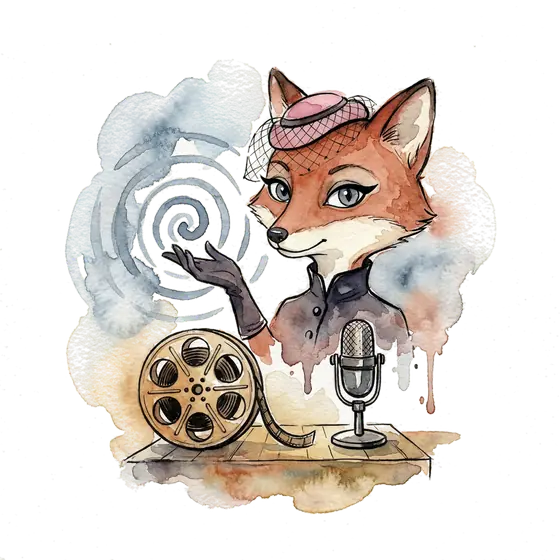
The fox sees the gap between a finished song and a finished campaign. The song can be ready while the cover image, video, pitch, radio plan and audience follow-up are still scattered across different inboxes. Connecting the layers does not guarantee attention. It gives attention somewhere to land.
Artist discovery needs more than reach#
Auddia describes Discovr Radio as an artist promotion platform built around guaranteed exposure and discovery. The company’s own product site places radio, audio identification and emerging artists in the same story. Music marketing teams should hold that promise at the right distance. Guaranteed placement is a distribution input. It is not the same as a listener becoming a fan.
Artist discovery is a sequence. The listener hears a track, recognises the artist, sees a visual or remembers a hook, then has a low-friction route to play again. Each step can disappear if the campaign has no identity. A video that looks interchangeable weakens recall. A radio placement with no follow-up wastes the moment. A link with no context asks the listener to do the whole job.
Music video promotion can therefore carry a practical burden. The visual does not need to explain the entire song, but it should make the artist recognisable and give the campaign a repeatable object. A strong visual can travel through a release page, a pitch deck, short clips, creator outreach, tour announcements and a fan’s memory.
Radio promotion has its own measurement problem. Exposure is not a click, and a station placement is not a completed conversion. The campaign brief should say what evidence the artist will retain: station, market, timing, creative version, listener response, streaming movement or direct audience action. The more modest the claim, the more durable the report.
| Item | Value |
|---|---|
| Radio | 28 |
| Video | 26 |
| Short-form | 22 |
| Release page | 14 |
| Fan follow-up | 10 |
The partnership’s public language is also careful about access and affordability. Music Video Marketplace says it was built around human-made, professionally filmed content that should not be reserved for artists with major-label budgets. That promise matters in a music industry where the phrase “professional” can quietly become a price barrier.

Build the campaign as a system#
Start with the release spine: one sentence about the song, one visual idea, one audience, one action and one proof point. Then make the assets obey that spine. The cover, video, radio pitch, creator note and artist bio can vary in shape while keeping the same promise. That is how a small team looks coherent without looking copied.
The U.S. Copyright Office report on AI and the IFPI industry work sit in the background of every modern release conversation. The precise rights position depends on the material and territory. The marketing rule is plain: know what the artist owns, what the platform licenses and what the campaign is allowed to show.
A partnership that joins visual content and radio exposure should also make provenance easy to explain. Who made the video? What can the artist use? Which territories are included? How long does the licence last? What happens when the song changes? Those questions are not friction to hide. They are the details that let a manager say yes without keeping one hand on the brake.
A good music marketing report separates delivery from outcome. Delivery is the video licensed, the campaign placed and the radio slot confirmed. Outcome is the listener response, the audience action and the evidence that the release was remembered. Do not make the first set sound like the second. An honest baseline gives the next release something to beat.
A release system is not a content calendar with more boxes. It is a chain of decisions that protects the artist’s identity while giving every channel a job. That is where independent artist promotion can become less exhausting and more repeatable.
Listen before you scale#
The current Reddit music conversation is not a clean market sample, and the absence of a direct Auddia thread is itself a limit worth recording. Public discussion around AI music, visual identity and release promotion can be noisy, personal and platform-specific. Use it for language and objections, then return to artist interviews, product terms and campaign data for decisions.
A same-week music community thread reacted strongly to a new model and the companies around it. It is not evidence about Discovr Radio, but it shows why independent artists care about control, identity and the terms around a release.
That distinction matters. A community voice can tell a marketing team what feels at stake. It cannot prove that a product delivers a result. The clean workflow is SIFT: stop, investigate the source, find the primary announcement, and trace the claim back to what was actually offered.
| Item | Value |
|---|---|
| Brief | +20 (running total 20) |
| Asset test | +18 (running total 38) |
| Audience | +14 (running total 52) |
| Rights check | +10 (running total 62) |
| Reusable | 62 |
Auddia and Music Video Marketplace are offering an example of the direction, not a finished category. The opportunity for artists and managers is to ask what can be connected now: a better visual route, a clearer radio pitch, a more useful release page and a record of the response. Those are modest moves. They compound.
The independent release is becoming a small production system with an artist at its centre.
The folkfox music marketing practice starts with that centre. The channel serves the artist, not the other way around. Build the identity, define the proof and let each route add a useful layer.
Source desk: Auddia announcement; Auddia; Discovr Radio; Music Video Marketplace; US Copyright Office AI report; IFPI; Spotify Loud and Clear; Music Business Worldwide; fresh music community discussion; Auddia label partnership record.
Independent artist promotion works best when it has a spine. Independent artist promotion connects the artist, the song, the visual, the radio route and the listener action. Independent artist promotion also needs a reusable brief. Independent artist promotion should leave a useful record. This is release campaign marketing with care, and it gives music video promotion, radio promotion and artist discovery different jobs. The fox follows the trail through the thicket, checks the den and keeps a paw on the map.
The future of independent artist promotion will not be one magic channel. It will be a clearer relationship between the song, the visual, the listener and the evidence.
Read more: folkfox journal.
Read more: talk to folkfox.
Read more: SEO and GEO services.
Read more: content marketing.
Read more: paid social.
Read more: FinTech marketing.
Read more: music marketing.
Frequently asked questions#
What is the Auddia and Music Video Marketplace partnership?
The 10 September 2026 announcement describes a partnership connecting Music Video Marketplace’s professionally produced music-video library with Auddia’s Discovr Radio artist promotion and guaranteed AM and FM placements.
What is independent artist promotion?
Independent artist promotion is the coordinated work of presenting a release, placing it in front of the right listeners, building recall and recording what happened without relying on a major-label campaign machine.
How should music video promotion be measured?
Measure delivery and outcome separately. Record the visual asset, distribution and campaign placements first, then track audience actions such as repeat listening, follows, ticket interest or direct responses.
What does radio promotion add to a release?
Radio promotion can add discovery and repeated exposure, but the campaign still needs a visual identity, a clear follow-up route and evidence that separates placement from listener response.
Why does artist discovery need a shared message?
A shared message helps the song, visual, radio pitch, release page and short-form content reinforce the same artist identity while still doing different jobs.
Read more on this topic#
Give the next release a system
folkfox helps artists, labels and music platforms turn creative identity, discoverability and campaign evidence into a clearer release path.
Want folkfox in your Google results and AI answers? Set folkfox as a preferred source.